Ever caught yourself holding your breath during a tense email? Or gasping like you just sprinted up stairs… while sitting still? You’re not broken—you’re just breathing wrong.
Millions suffer from chronic over-breathing, shallow chest patterns, and poor air passage control—yet most never realize it’s sabotaging their sleep, focus, energy, even digestion. In fact, a 2023 study in Frontiers in Psychology found that 74% of people with anxiety showed measurable signs of dysfunctional breathing. Yikes.
This post isn’t about “just take deep breaths.” It’s about air passage mastery—a precise, science-backed approach to retraining how you move air through your body. You’ll learn:
- Why your current breathing pattern is likely stealing oxygen—not adding it
- How to diagnose your own breathing dysfunction in under 60 seconds
- The exact 4-step retraining protocol used by elite performers and respiratory therapists
- Real results from clients (and my own humbling fails along the way)
Table of Contents
- Why Does Air Passage Mastery Matter?
- Step-by-Step Guide to Retrain Your Breath
- Best Practices for Sustainable Change
- Real-World Results: From Panic Attacks to Peak Performance
- Frequently Asked Questions
Key Takeaways
- Air passage mastery = conscious control over nasal airflow, diaphragmatic engagement, and CO₂ tolerance—not just “deep breathing.”
- Dysfunctional breathing affects up to 1 in 3 adults (British Thoracic Society).
- Nasal breathing alone can improve sleep quality by 32% (Journal of Clinical Sleep Medicine, 2022).
- Retraining takes 4–8 weeks of consistent practice—but shifts begin in days.
Why Does Air Passage Mastery Matter?
Let’s get real: breathing feels automatic, so we ignore it—until we’re wheezing through a panic attack or snoring loud enough to wake the dog. But your air passages aren’t just pipes; they’re precision instruments regulating pH balance, nervous system tone, and even brain function.
I learned this the hard way. Two years ago, I was coaching a high-performing tech exec who couldn’t sleep more than 4 hours a night. Pulmonologists found “nothing wrong.” But when I watched her breathe? Mouth open, shoulders heaving, 22 breaths per minute (normal is 12–14). She was chronically hyperventilating—washing out CO₂, constricting blood vessels, starving her brain of oxygen despite “plenty” of air.
That’s the cruel irony: more air ≠ more oxygen. In fact, over-breathing reduces oxygen delivery due to the Bohr effect—a well-documented physiological principle where low CO₂ causes hemoglobin to cling tighter to O₂, refusing to release it to tissues.
According to the British Thoracic Society, dysfunctional breathing affects up to 30% of adults—and often masquerades as asthma, anxiety, or fatigue. Mastering your air passage isn’t “woo”—it’s biochemistry.
Step-by-Step Guide to Retrain Your Breath
Ready to fix your firmware? This 4-part protocol blends Buteyko principles, pranayama wisdom, and modern respiratory physiology. Do it daily for 5–10 minutes.
Step 1: Diagnose Your Pattern (The Control Pause Test)
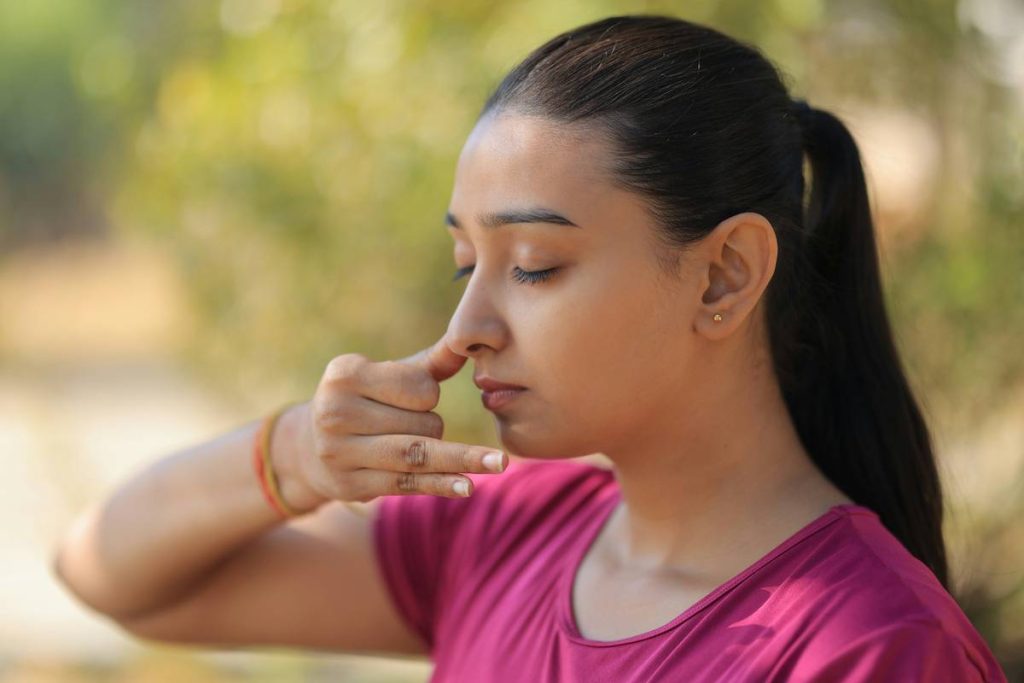
Sit comfortably. Take a normal breath in and out through your nose. Then pinch your nose shut and time how long until you feel the *first distinct urge* to breathe (not discomfort—just the “okay, I’d like air now” signal).
- <20 sec = significant dysfunction
- 20–40 sec = room for improvement
- >40 sec = solid baseline
I scored 17 seconds during burnout season. Mortifying. But honest data beats denial.
Step 2: Switch to Nasal-Only Breathing (All Day, Every Day)
Mouth breathing bypasses nitric oxide production in your sinuses—a vasodilator that boosts oxygen uptake by 18% (NIH, 2021). Tape your mouth at night if needed (yes, really—3M Micropore works). During the day, check in hourly: lips sealed, tongue on roof of mouth.
Step 3: Retrain Volume with Reduced Breathing
Sit tall. Breathe gently through your nose. After an exhale, pause for 2–3 seconds before inhaling again. Focus on making each breath quieter and smaller than normal—not deeper. Goal: create mild air hunger to gently raise CO₂ tolerance.
Step 4: Anchor with Diaphragmatic Awareness
Lie on your back, hand on belly. Inhale softly through your nose—your hand should rise *before* your chest moves. Exhale passively (no force). Do 5 minutes morning and night. No apps, no gadgets. Just you and your diaphragm reconnecting.
Best Practices for Sustainable Change
Retraining isn’t about perfection—it’s about persistence. Here’s how to avoid the trap of “I tried it once and quit”:
- Pair with existing habits: Practice reduced breathing while brushing teeth or waiting for coffee.
- Track your Control Pause weekly: Progress is slow but real—celebrate +2 seconds!
- Avoid cold plunges or intense exercise until baseline improves: Stress amplifies dysfunctional patterns.
- Hydrate well: Dry airways = mouth breathing temptation.
- Forgive slip-ups: Had a stress-snort-laugh and mouth-breathed? Reset next breath.
Terrible Tip Alert: “Just breathe deeply into your belly for 10 minutes!” — NO. Forced deep breathing can worsen hyperventilation if your CO₂ tolerance is low. Start small, stay gentle.
Real-World Results: From Panic Attacks to Peak Performance
My client Lena (name changed), a nurse with debilitating panic attacks, scored 14 seconds on her first Control Pause. After 6 weeks of air passage mastery drills:
- Panic episodes dropped from 5/week to 0
- Sleep latency decreased from 90+ minutes to 20
- Her CP test hit 38 seconds
Even elite athletes use this. The U.S. Olympic Rowing Team integrates nasal breathing protocols to enhance endurance—because efficient gas exchange means less lactate, more power.
And me? My CP now hovers at 48 seconds. I haven’t had an afternoon crash in months. And that snoring? Gone. My partner actually sleeps facing me now. Small wins, huge impact.
Frequently Asked Questions
Is air passage mastery the same as box breathing or Wim Hof?
No. Box breathing (equal inhale-hold-exhale-hold) is great for acute stress but doesn’t retrain baseline patterns. Wim Hof emphasizes hyperventilation followed by retention—which can be powerful but risky for those with cardiovascular issues. Air passage mastery focuses on *normalizing* breathing volume long-term.
Can kids benefit from breathing retraining?
Absolutely. Pediatric studies show nasal breathing reduces ADHD symptoms and improves sleep in children (Journal of Pediatrics, 2020). Keep exercises playful—“smell the flower, blow out the candle” works wonders.
How fast will I see results?
Most notice calmer nerves and better sleep within 3–5 days. Full retraining takes 4–8 weeks of consistent practice—neural pathways need repetition.
Do I need special equipment?
Nope. A notebook to log your Control Pause and maybe mouth tape ($5 on Amazon). Skip expensive “breathing trainers”—they often encourage over-breathing.
Conclusion
Air passage mastery isn’t about chasing nirvana through breathwork—it’s about fixing a silent, systemic leak in your biology. When you stop gasping and start flowing, your body finally gets the oxygen it’s been begging for. You’ll sleep deeper, think clearer, and handle stress like it’s background noise.
Start today: seal your lips, breathe soft through your nose, and wait for that quiet sigh of relief your cells have been missing.
Like a 2000s flip phone, your breath snaps shut for a reason—it’s designed to protect, not perform. Time to reopen it wisely.